Saturday, August 9, 2008

Monkey of the Day


A booth on Stortorget in Lund for the Jehova's Witnesses. Apparently they don't believe in monkeys...

Sunday, August 3, 2008

The Things I Carried Redux

LUND--Now I know everyone of you three or four people who read this has been waiting with bated breath to find out how I fared with my camera equipment and well, here, finally, is the answer. I do think, given what I have, which is plenty and I shouldn't complain but I will, worked fine. It was all the correct choice. But I am rather a stickler about equipment and I am not satisfied.

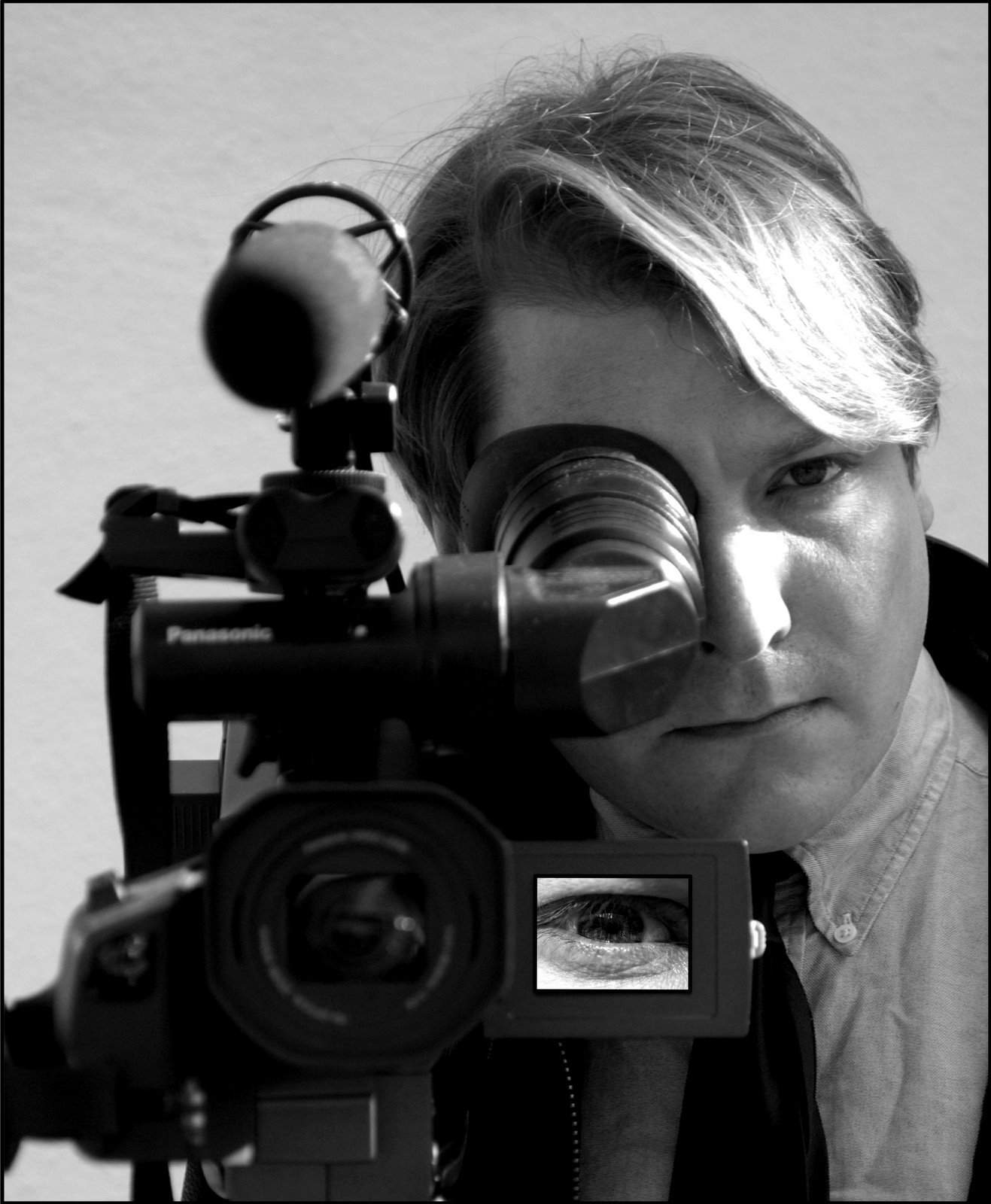
First, the Panasonic DVC60. It is an excellent camera and takes great video under every situation and has never given me any trouble. And the shoulder mount can be nice. But it isn't a terribly good solution for someone doing what I am doing. It just is too big. It is physically large and given that I am never going to give up taking stills too much to carry. It might be viable for a person completely dedicated to motion pictures. However, that being said it is, especially for a lone cameraman, obtrusive. If you were backing up a reporter who already got the, "I am invading your life." stuff out of the way it would be pretty perfect. But I am, to date, solo. I am not discounting or ignoring all the people who pave the way for me, translate, drive, fix and explain, but I am alone in the reporting business with no other person to shift the attention off of away from the BIG FRIGGIN CAMERA AND THE OTHER TWO AROUND MY NECK.

The Leica M6ttl performed splendidly as usual but here in Sweden getting 24 rolls of 36 exposure Kodak 400CN developed, no prints only crappy scans to CD cost nearly $300. That ain't near the price of a digital Leica M8 but it's a statistically significant portion. The old Leica Digilux 1 also performed nicely but, well, it just is a very old cmera in digital terms. Still, I am very happy with it. For lack of a better term it takes magical pictures, at 4 mega-pixels, and, well, a lot of contemporary cameras should be ashamed. But still it is not what it could be in terms of modern technology. Still, I will keep using it, at least in certain circumstances, for a long time to come. It is truly an outstanding picture-taker and deserving of cult status.

But here, I think, is what I want. Like Jimmy Carter for other women, I lust in my heart after a Leica M8 but unlike Mr. Carter I find that no sin. Or maybe I do. I put the M6 away today and had a good hour of near panic attack. But right now I cannot afford the film and cannot afford the temptation to load it up and then have that film to develop. The M8 sounds good but, practically speaking I need a new SLR. The old D1x is just that, old. And maybe I need to reevaluate it because it takes very fine photos but it too is big and unwieldy and I often and am not prone to carry it. So perhaps a Nikon D300 or full sensor D700.

As for the video camera, the Panasonic DVC30 with the tiny Sennheiser MK400 microphone would, I think, be ideal. So there, that video camera, the Nikon D700 with the 55mm Micro Nikkor and 20mm Nikkor, and the Leica M6 with just the 50mm Summicron and black and white film. Because it is expensive but if the subject is right I'm not ready to give up changing a piece of reality forever by making the choice to expose some film, of recording history. And of having with me a camera that will keep working without the need to charge a battery.

Friday, August 1, 2008

Tuesday, July 29, 2008

A Few Photos


Sue Keller, one of the SARA delegation, sent me some photos she took of me on the trip to Ukraine.

Monday, July 21, 2008

Friday, July 18, 2008

Once More Into the Scrubs Dear Friends


MUNCACHEVO--I filmed some surgeries in Ukraine for the first time since Hospital Regional de Occidente in Santa Rosa de Copan, Honduras a few years ago. I remember when I first filmed and photographed surgery, back at that hospital in 2000, I was very excited and enjoyed the experience very much. It was, and it still is, a great privilege, to watch and to document many talented and dedicated physicians at work. In this case it was Ukrainian orthopedic surgeon Dr. Yuri Demjan. And it brought to mind watching many procedures in Honduras, most memorably those with the brilliant reconstructive work of Columbus, Ohio plastic surgeon Dr. Les Mohler and anesthesiologist Dr. Paul Potter.

But there is somewhat of a limit to enjoying surgery, at least when one isn't actually doing it (and that I wouldn't know although I have always taken great pride in my splinter-removal technique). After a while, at least to the camera, the most fascinating surgery becomes a bunch of masked people, intently clustered around a big blue or green sheet, digging in a small, bloody square of flesh. And pretty much that's it. Often for hours on end. And the next case, no matter how interesting, looks pretty much the same while it's going on. The truly fascinating parts are before and after. Meeting the people, both the doctors and the patients who are about to go under he knife. And then afterwards, seeing them or their relatives and how this procedure has changed their lives.

And that is the true pleasure. Of seeing how the doctors of groups like SARA or CAMO have changed lives by fixing a spine or a cleft lip or any number of other procedures. Of how, most importantly, they have helped train local doctors to keep doing the work day in and day out.

Wednesday, July 16, 2008

Return From Transcarpathia


LUND--I would say that overall the trip was a success. Over the month I was pulled in many different directions and shown a rather vast overview of SARA projects around Transcarpathia. I shot 24 rolls of 36 exposure black and white film, a lot of digital and I haven't counted the tapes yet but they add up to many, many hours. I don't, however, think I have a full-length documentary. There are too many pieces and disparate themes to tie together in that way. Fortunately, however, in speaking with the SARA team, what they want (as I suspected they would) are shorter films. When they are speaking to a group there simply isn't time to do that and to show an hour-long film. So, News From El Salvador, which only mentions SARA in the credits, as it is a stand-alone, film, as straightly journalistic as I could make it, will be something of a prestige project. I will now edit for them a short (10-15 minute) film based on the El Salvador footage and then a similar length film detailing the projects in Ukraine. From there I will make several short, reportage films on different subjects I encountered. The State run mental hospital in the Carpathian mountains, the gypsy settlement outside of Baraczsasz etc. Check back as new galleries will be posted on the website soon and new stories on the blogs, both from Transcarpathia and from life here, back in Sweden.