Tuesday, July 29, 2008

A Few Photos


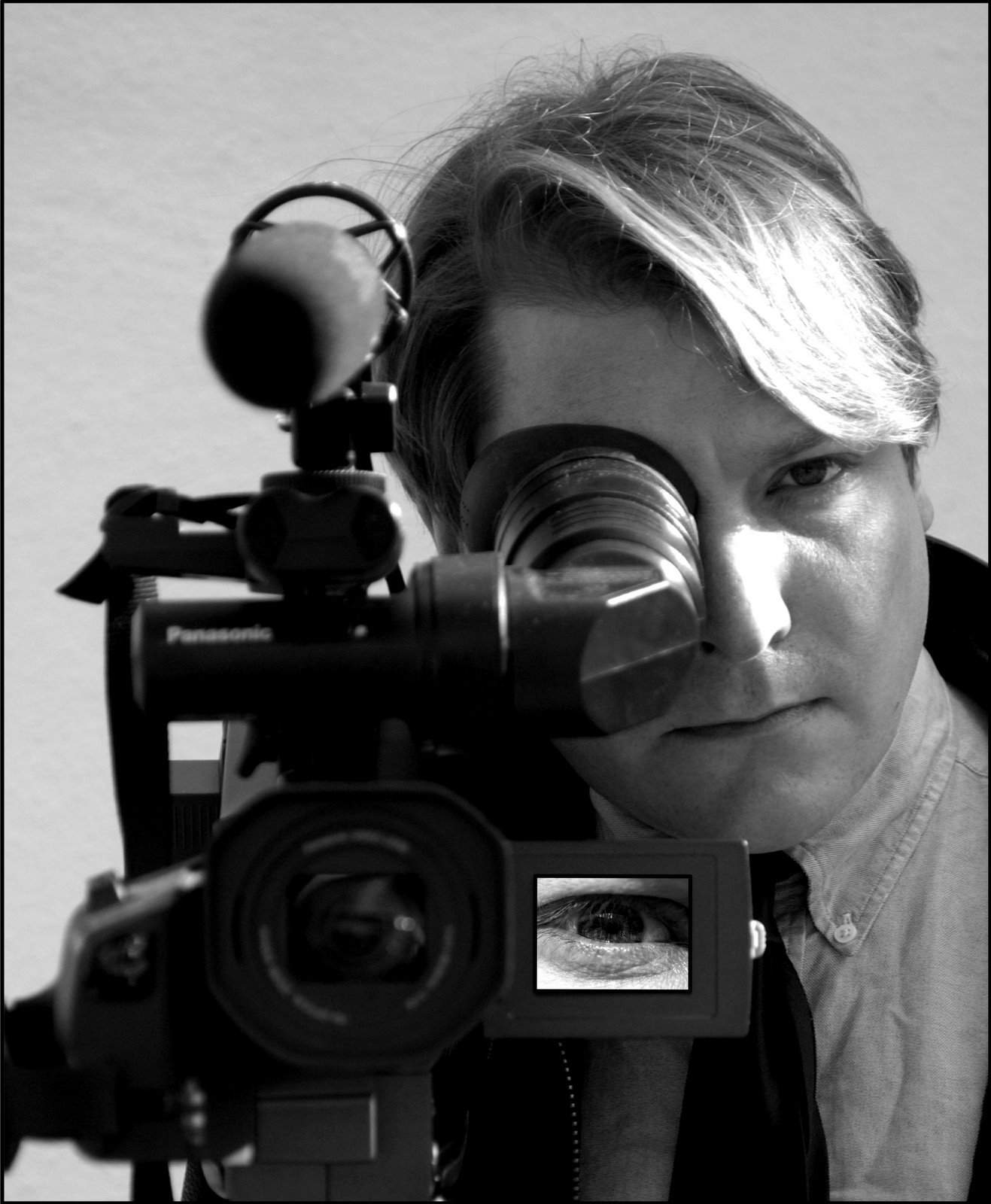
Sue Keller, one of the SARA delegation, sent me some photos she took of me on the trip to Ukraine.

Monday, July 21, 2008

Friday, July 18, 2008

Once More Into the Scrubs Dear Friends


MUNCACHEVO--I filmed some surgeries in Ukraine for the first time since Hospital Regional de Occidente in Santa Rosa de Copan, Honduras a few years ago. I remember when I first filmed and photographed surgery, back at that hospital in 2000, I was very excited and enjoyed the experience very much. It was, and it still is, a great privilege, to watch and to document many talented and dedicated physicians at work. In this case it was Ukrainian orthopedic surgeon Dr. Yuri Demjan. And it brought to mind watching many procedures in Honduras, most memorably those with the brilliant reconstructive work of Columbus, Ohio plastic surgeon Dr. Les Mohler and anesthesiologist Dr. Paul Potter.

But there is somewhat of a limit to enjoying surgery, at least when one isn't actually doing it (and that I wouldn't know although I have always taken great pride in my splinter-removal technique). After a while, at least to the camera, the most fascinating surgery becomes a bunch of masked people, intently clustered around a big blue or green sheet, digging in a small, bloody square of flesh. And pretty much that's it. Often for hours on end. And the next case, no matter how interesting, looks pretty much the same while it's going on. The truly fascinating parts are before and after. Meeting the people, both the doctors and the patients who are about to go under he knife. And then afterwards, seeing them or their relatives and how this procedure has changed their lives.

And that is the true pleasure. Of seeing how the doctors of groups like SARA or CAMO have changed lives by fixing a spine or a cleft lip or any number of other procedures. Of how, most importantly, they have helped train local doctors to keep doing the work day in and day out.

Wednesday, July 16, 2008

Return From Transcarpathia


LUND--I would say that overall the trip was a success. Over the month I was pulled in many different directions and shown a rather vast overview of SARA projects around Transcarpathia. I shot 24 rolls of 36 exposure black and white film, a lot of digital and I haven't counted the tapes yet but they add up to many, many hours. I don't, however, think I have a full-length documentary. There are too many pieces and disparate themes to tie together in that way. Fortunately, however, in speaking with the SARA team, what they want (as I suspected they would) are shorter films. When they are speaking to a group there simply isn't time to do that and to show an hour-long film. So, News From El Salvador, which only mentions SARA in the credits, as it is a stand-alone, film, as straightly journalistic as I could make it, will be something of a prestige project. I will now edit for them a short (10-15 minute) film based on the El Salvador footage and then a similar length film detailing the projects in Ukraine. From there I will make several short, reportage films on different subjects I encountered. The State run mental hospital in the Carpathian mountains, the gypsy settlement outside of Baraczsasz etc. Check back as new galleries will be posted on the website soon and new stories on the blogs, both from Transcarpathia and from life here, back in Sweden.

Thursday, June 5, 2008

Design for New Point and Shoot


LUND--Since Leitz listened to me so well about the design of the M8, minus a few details of course, but pretty much exactly what I asked for (other than them sending me one or two free ones and some lenses) I have decided to tell them how to design another camera.

My first digital camera, bought in 2002 shortly after returning from Honduras, was their Digilux 1. For those unfamiliar with the Digilux 1, it is a 4 megapixel camera with a relatively large and fast variable f2-2.5 Leica Vario-Summicron lens. In many ways it is a large and glorified point and shoot. It is roughly the same size and shape as the old American made Argus C3 (in other words shaped like a brick). This, in itself, is ironic as the C3 was an inexpensive rangefinder that Argus sold zillions of to people who couldn't afford Leicas! The styling of the Digilux 1 is determinedly retro and people are always surprised to discover it is, in fact, a digital machine. What sets the D1 (as I will call it from now on, but not to be confused with Nikon's SLR of the same designation) apart are several things. For a P&S it is very fast. There is a very short lag time between pushing the button and the picture being taken. It is stunningly, almost creepily quiet. It has a built in flash as well as a hot-shoe. Covering the large and sharp back screen is a removable hood and the whole thing is well and solidly built. It won't fit in anything but a large pocket but it is meant more as a working camera, big enough to hold steady and able to hang around the neck above or below (as you see fit to work) your film M6 (or M3, MP, M7 or whatever). And for being a mere 4 megapixels it produces beautiful pictures that kick the crap out of most but the most recent P&S cameras. The pictures are far better than the general crop of pocket sized snappers even though they brag 8, 10 and even more million pixels. Still, all that being said, 4 is really not quite enough in the end. Were this camera to have 6 I would be almost completely happy with it. Still, it is the digital I am going to take with me to Ukraine along with my M6ttl loaded with black and white film. Since I am going there with the primary purpose of making a movie I think these two will do fine indeed for the stills.

But this brings me to what Leica needs to do--are you listening you horde of lens-polishing Huns? You über-machinist Boche? Efficient and meticulous Kraut bastards? Don't make me come over there and get all 8th Air Force on your lederhosen-wearing butts.

What we need is a very, very fine P&S. It is OK for it to be a bit on the large size, we need to be able to hold onto it. It should be shaped like the M series cameras, perhaps the size of, or even a little bigger than the Canon G9. It should be made of metal. And it should be ALL BLACK with no shiny areas except one cool little red dot. Or, for those who like it as such, come in a traditional black and silver body AS WELL. Its lens should retract into the body, leaving the camera at least basically flat on both sides, a short, protruding flange protecting the lens is OK, however. The camera should come in a zoom-lens model (about 28-135mm) as well as in fixed 50mm and 35mm models with correspondingly better and faster optics. It should have a built in flash as well as a hot-shoe and the controls should be simple. It should shoot in RAW, have a larger sensor than a normal P&S, and have a finely-tuned black and white mode with the ability to set it to shoot both color and black and white simultaneously just as many cameras will shoot RAW and JPEG at the same time. It should be around 10 megapixel and, if you can do it, have dual card slots. There, that's pretty much it. If you have any questions get in touch. Don't make me get all up and Patton in your face.

Wednesday, June 4, 2008

Sunday, June 1, 2008


LUND--A little over two years ago I spent four months in Central America working and studying and traveling with Katy Kropf. It was in El Salvador that I was introduced to the coastal fishing communities that I would make the documentary film about I recently finished. After we got back to the US I put all my energy into that project and, more or less, the only negatives and digital files I worked with were those relating to that project. The other three and a half months of negatives have been neglected. The other day I went in the darkroom here at Hemgarden, the local community center and printed these. I photographed them then and in low light so they are less than sharp. But at least it is a start.